
-
1967
The East African Community is founded by the Governments of Uganda, Tanzania and Kenya. The three governments conceive national accountancy institutes, each to be set up by an enabling law.
-
1970
Uganda enacts an Accountants Act, but amid the political upheavals of the time it never receives the Presidential assent it needs to take effect.
-
1992
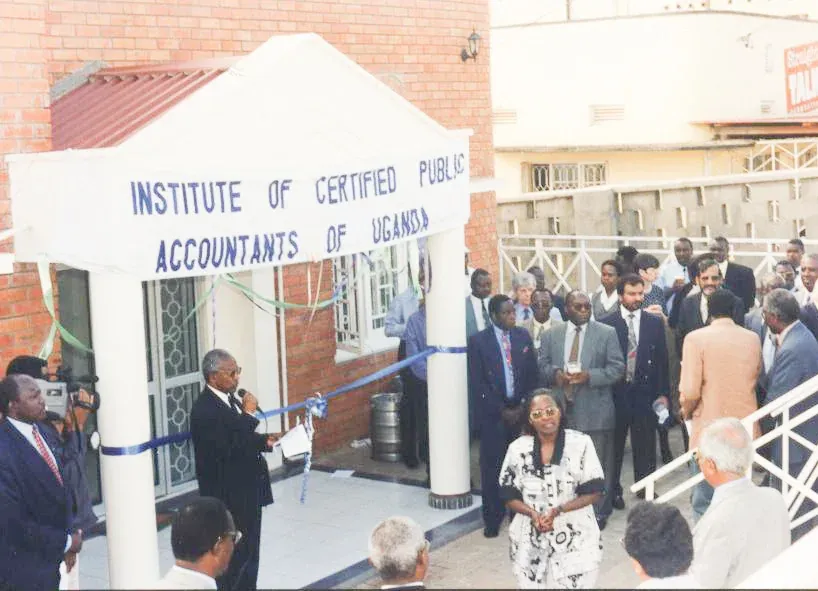
A new Accountants Act is enacted and ICPAU is established. Its first 79 professional accountants all hold foreign qualifications. A US$1 million seed grant funds a twinning arrangement with the Institute of Chartered Accountants of Scotland (ICAS).
-
1994
The first elected Council is formed on 8 November 1994, and CPA George W. Egaddu becomes the Institute’s first President.
-
1998
The first CPA(U) examinations are held, and the Institute adopts International Financial Reporting Standards (IFRS).
-
1999
The Institute adopts International Standards on Auditing (ISAs).
-
2006
The Institute adopts International Public Sector Accounting Standards (IPSAS).
-
2009
The Institute adopts IFRS for Small and Medium-sized Entities (IFRS for SMEs).
-
2011
The East African Community Institutes of Accountants sign a Mutual Recognition Agreement to promote the mobility of professional accountants in the region.
-
2013
The Accountants Act, 2013 now governs the Institute. Council terms become two years, with a member eligible for two terms.
-
2024
The Uganda Business and Technical Examinations Board (UBTEB) takes over the assessment and conduct of Accounting Technicians Diploma (ATD) examinations from 1 January 2024.
The first Councils
-
1993
Owing to its infancy nature at the time in 1993, the then Minister of Finance appointed an interim Council to manage the affairs of the Institute. This comprised of the following members:
- George W. Egaddu – Interim President
- Ben Okello Luwum – Interim Secretary
- Auditor General – Ex-Officio member
- Commissioner of Accounts – Ex-Officio member
- Commissioner for Education – Ex-Officio member
-
1994
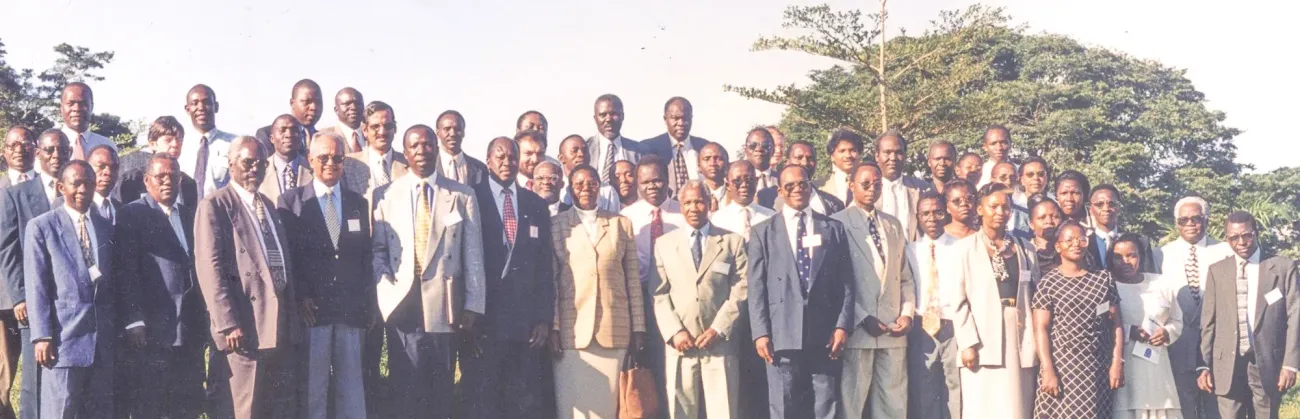
On 8 November 1994, the first duly elected Council was formed comprising of the following:
- CPA George W. Egaddu
- CPA Joseph Baliddawa
- CPA Pius K. Bahemuka (Late)
- CPA Ben Okello Luwum
- CPA Steven Turyahikayo
- CPA Fulgence Mungereza
- CPA Fawn E. Cousens
-
1996
The Late CPA Pius K. Bahemuka later on took up the position of Secretary / Chief Executive Officer. The Council then co-opted CPA Narendra Ambalal Thakkar to replace him. CPA Thakkar was subsequently duly elected as a Council Member on 21 June 1996.